An alternative ventilation solution for ventilation in crawl spaces, basements, and other below-ground level spaces as well as for air supply for fireplaces and low-placed machines or ventilation systems.
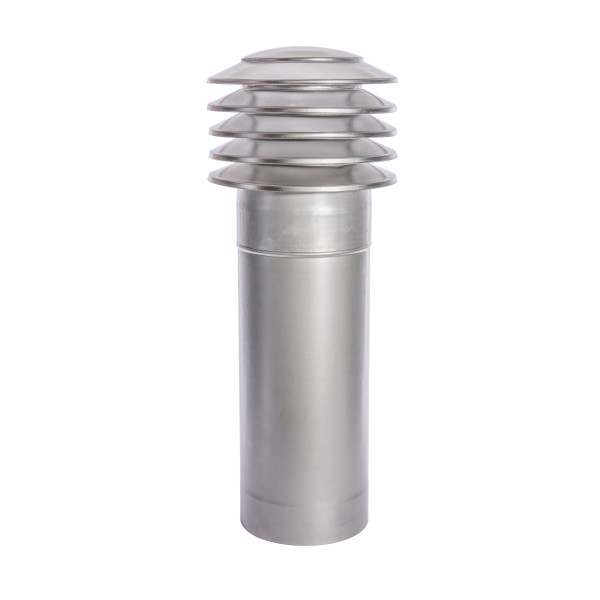


Ventilation shafts are an efficient and durable solution for ventilating basements, crawl spaces and other below-ground areas. Contractors and installers use these shafts to prevent moisture and mould while supplying fresh air to underground spaces. Ventilation shafts also provide a reliable air supply for fireplaces, low-level machinery and ventilation systems.
A ventilation shaft is a rigid duct element, often manufactured from stainless steel, that supplies outdoor air to interior spaces. A specially designed hood or mesh prevents rainwater and pests from entering the system. Because the shaft is installed outside the building, maintenance is simple and inconvenience for occupants is kept to a minimum.
Many interior spaces, such as basements and crawl spaces, lack sufficient natural ventilation. Installing a ventilation shaft creates a direct connection with outdoor air. This helps prevent condensation and excessive humidity while improving comfort and extending the lifespan of the structure. Ventilation shafts are also suitable for mechanical systems, including balanced ventilation systems, fireplaces and low-level machinery.
Ventilation shafts provide a practical ventilation solution for crawl spaces, basements and other below-ground areas, as well as for supplying air to fireplaces, low-level machinery and ventilation systems. In addition to basement and crawl space ventilation, ventilation shafts are also suitable for:
Ventilation shafts are available in a range of diameters (125–300 mm) and lengths to suit different construction situations. They can be extended with extension sections and end components, increasing flexibility for basement and crawl space ventilation applications. Besides the standard stainless steel finish, custom options are available, including RAL colours and mounting rings for prefabricated installations.
Each ventilation shaft is equipped with a rain hood and mesh screen to keep out rainwater and debris while ensuring a controlled airflow. During installation, floor finishes and basement floors remain undamaged, which is particularly beneficial for commercial projects.
Professionals choose ventilation shafts because of their combination of convenience, effectiveness and durability. Key advantages include:
Ventilation shafts can be installed easily from the outside without major structural work. The modular design allows both length and diameter to be adapted to the specific situation. Once installed, maintenance requirements are minimal; occasional cleaning of the rain hood and checking for blockages is generally sufficient.




 Nederlands
  Deutsch
  Français